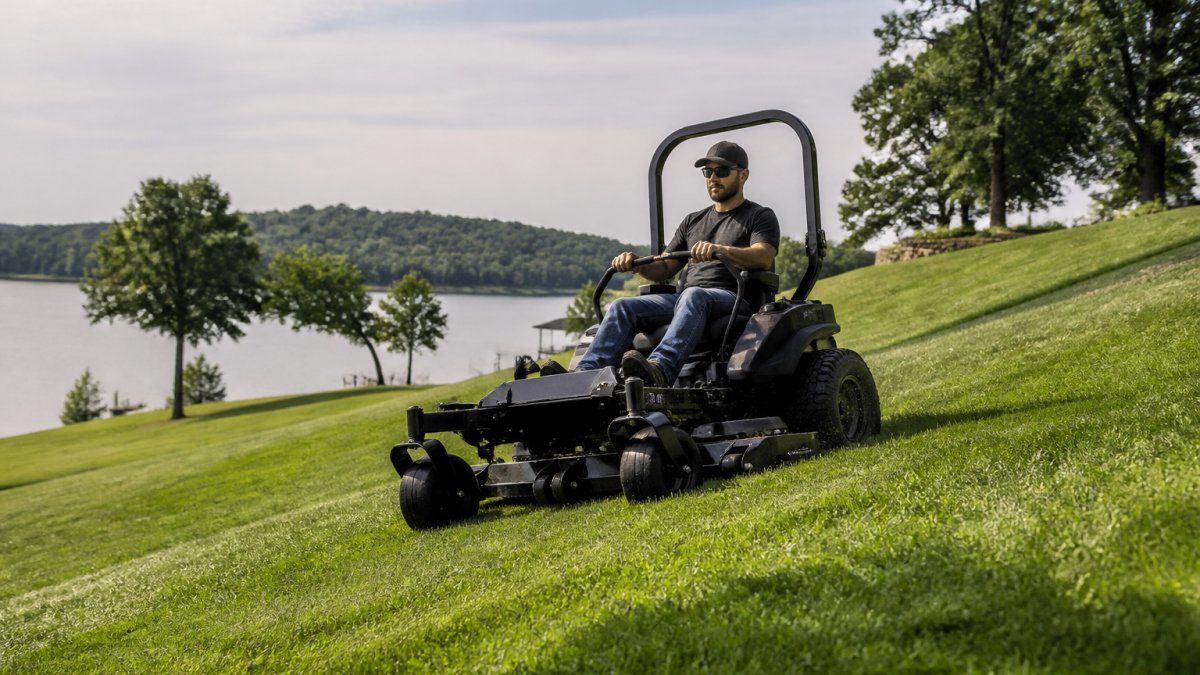
 comparison
How to Find a Compact Tractor for Sale Near Me
Last Updated: October 28, 2026
Quick Summary
To find a compact tractor for sale near me, set a location radius of about 50 miles around your ZIP code on a dealer site, then filter by condition, make, model, horsepower, and drive type. Confirm the seller's actual city and state before you call.
- A compact tractor is a small utility tractor, typically under 60 horsepower, built for property work.
- Compare total cost over your ownership period, not the sticker price alone.
- A loader is usually the attachment that justifies the tractor in the first place.
- Match attachments to the job, and confirm PTO horsepower supports the implement.
- Inspect any used compact tractor with a checklist before money changes hands.
Table of Contents
- How to Search Compact Tractor for Sale Near Me Listings
- Comparing New and Used Compact Tractors for Sale
- Finding Compact Tractor Dealers Near Me vs. Private Sellers
- Why a Compact Tractor with Loader Does More Work
- Matching Compact Tractor Attachments to the Job
- Inspecting a Used Compact Tractor Before You Buy
- Frequently Asked Questions
How to Search Compact Tractor for Sale Near Me Listings
Searching for a compact tractor for sale near me works best when you treat it like a filtered inventory search, not a browsing session. At 7S PowerSports, LLC in Le Roy, we watch buyers waste weeks scrolling because they never set search criteria first. A compact tractor is a small utility tractor, typically under 60 horsepower, built for property work with front-end loaders and rear attachments. On any dealer site, set your location radius, then filter by condition, make, model, horsepower, and drive type. Check listing counts to see whether your filters are too tight.
Start with distance. A 50-mile radius around your ZIP code usually covers enough inventory to compare prices without turning every dealer visit into a road trip. Then narrow by category: new equipment versus used equipment, loader-equipped versus bare tractor.
Always confirm the seller's actual city and state before you call.
Federal Trade Commission guidance on buying and leasing vehicles covers consumer protections worth knowing before you negotiate any equipment purchase.
Comparing New and Used Compact Tractors for Sale
The choice between new and used comes down to warranty versus price, but the real decision is total cost of ownership over the years you plan to keep the machine. Most buyers compare only the asking price and miss financing, insurance, maintenance, fuel, and transport, the costs that decide whether a cheaper used tractor actually saves money.
Upfront price and depreciation. Compare the upfront price and condition of new and used compact tractors.
Insurance and transport. Compact tractors are commonly covered under a homeowner policy or a standalone equipment policy; confirm which applies before you buy, because a private sale may leave you uninsured on the drive home. Transport is a real line item: a compact tractor plus loader often needs a trailer and a properly rated tow vehicle, and delivery from a dealer can be arranged where a private seller may not offer it.
Maintenance and fuel. New machines need scheduled service to keep the warranty valid. Used machines need a pre-purchase inspection and a budget for wear items, tires, hydraulic hoses, filters, and battery. Diesel fuel and fluid costs scale with hours worked, so estimate your annual hours before comparing.
Factor | New | Used |
|---|---|---|
Warranty | Full manufacturer coverage | Limited or none; check transfer terms |
Upfront cost | Higher | Lower |
Depreciation | Steepest in early years | Largely absorbed by prior owner |
Financing | Dealer and OEM programs | Often private or limited |
Insurance | Confirm coverage before delivery | Confirm coverage before pickup |
Maintenance | Scheduled service to keep warranty | Inspection plus wear-item budget |
Risk | Low | Condition-dependent |
Best for | Long-term owners | Budget-focused buyers who inspect carefully |
A common mistake is buying used without checking service records. Ask for maintenance history, hour meter readings, and any warranty transfer terms. Many buyers find that a well-kept used machine with moderate hours outperforms a stripped-down new unit at the same budget.
Finding Compact Tractor Dealers Near Me vs. Private Sellers
When comparing sellers, consider what information and support are available for each tractor.
Why a Compact Tractor with Loader Does More Work
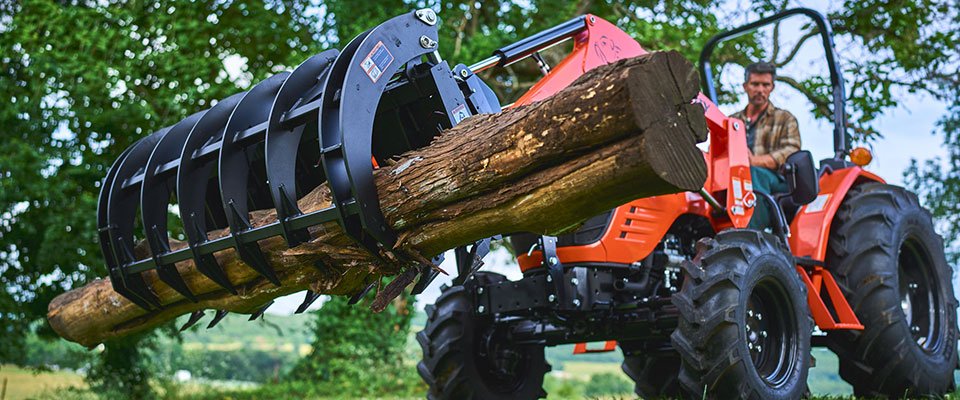
A compact tractor with loader turns one machine into a material-handling tool. The front-end loader handles gravel, mulch, soil, and snow, while the rear hitch runs mowers, tillers, and box blades. Buyers who skip the loader often regret it, because adding one later costs more than buying it equipped, and the loader is usually the attachment that justifies the tractor in the first place.
Match loader capacity to the job, not the brochure. Lifting pallets of feed demands more capacity than moving loose topsoil. Check the loader's rated lift capacity at the pins and at full height, and compare it to the weight of what you actually move. A loader that barely lifts your typical load will frustrate you every weekend.
Horsepower and hydraulic flow decide what the loader can do. Loader cycle speed depends on hydraulic pump flow, and breakout force depends on pressure. A higher-horsepower tractor does not automatically have a faster loader; check the implement's hydraulic requirements against the tractor's specifications. For rear implements, confirm PTO horsepower supports the implement before you buy, a rotary cutter sized for the PTO rating will bog down a smaller tractor.
Choosing horsepower and attachments for specific jobs. Match tractor capability and implements to acreage, terrain, mowing, loader work, and other tasks:
- Small acreage and lawn-edge work: a sub-compact or small compact with a loader and a mid-mount mower or rotary cutter.
- Pasture mowing: a rotary cutter sized to the PTO horsepower, with a tractor heavy enough to stay stable on slopes.
- Driveway and grading: a box blade or land plane, plus a loader for moving material.
- Snow removal: a front blade or snow blower matched to the loader or front hitch.
- Garden and tillage: a tiller sized to the PTO rating, worked at a speed the tractor can sustain.
Confirm the loader is complete. Verify the mounting frame, hydraulic connections, and a bucket in usable condition are included. A loader sold without its frame or hoses is a project, not a bargain.
Matching Compact Tractor Attachments to the Job
Compact tractor attachments should follow the job, not the other way around. Mowing pasture calls for a rotary cutter. Snow removal needs a blade or snow blower. Garden work uses a tiller, and grading driveways calls for a box blade. Buy attachments that match your tractor's horsepower and hitch category.
In practice, most property owners start with a loader and one rear implement, then add as needs appear. Confirm the PTO horsepower supports the implement before you buy.
Inspecting a Used Compact Tractor Before You Buy
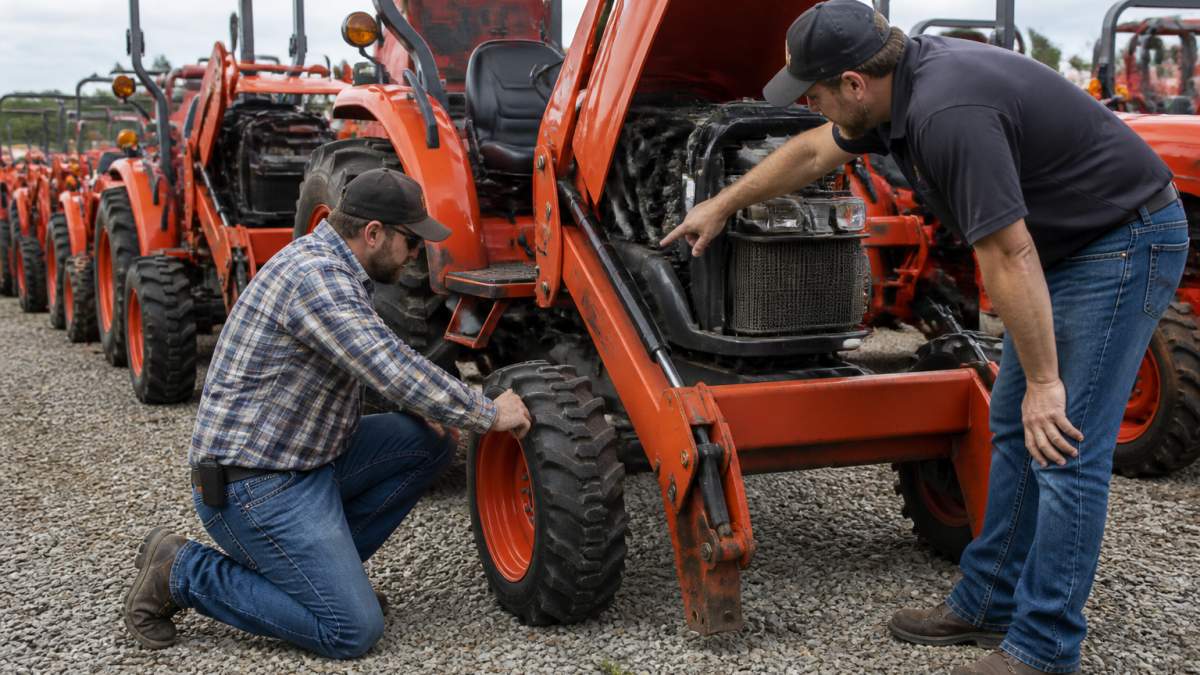
Inspect any used compact tractor with a checklist before money changes hands. Walk the machine cold, check for leaks under the engine and transmission, examine tire wear, test every hydraulic function, and confirm the hour meter matches the wear you see. Ask for service records and verify the serial number.
- Check engine and hydraulic fluid levels and color
- Look for leaks under the tractor after it sits
- Test loader raise, lower, and tilt through full range
- Inspect tires for cuts and uneven wear
- Confirm PTO engages smoothly
- Verify hour meter against condition
- Request service records and serial number
OSHA tractor safety guidance for operators is worth reviewing before you put any machine to work.
Frequently Asked Questions
What size compact tractor do I need for my property?
Match tractor size to your acreage and tasks. Bring your acreage, slope, and planned attachments when seeking advice.
Should I buy a new or used compact tractor?
When comparing new and used compact tractors, consider the machine's condition and ask about its history. You can check hours, service records, hydraulic leaks, and tire wear before committing.
Do compact tractors come with a loader?
Check the listing or ask the seller whether a loader is included with the tractor.
What attachments do I need for a compact tractor?
Start by considering the jobs you need to do and check that any attachments you consider are compatible with the tractor.
Finding the right compact tractor near you comes down to setting smart search filters, comparing new and used honestly, and inspecting before you commit. At 7S PowerSports, LLC, we stock Bad Boy and Mahindra tractors and back every sale with a full-service parts and repair department. Our team helps you match horsepower, attachments, and budget to your property. Get started with 7S PowerSports, LLC and find the compact tractor that fits your land.