 Comparison
Choosing a Compact Tractor for Small Farm Work
Last Updated: November 14, 2026
Quick Summary
A compact tractor for small farm work pairs a mid-size diesel engine with a three-point hitch, hydraulics, and enough weight to pull ground-engaging implements. Match horsepower and loader lift capacity to your weekly tasks: 25 to 35 horsepower with 800 to 1,200 pounds of pivot lift covers most five- to fifteen-acre homesteads.
- Sub-compact tractors suit lots under five acres; compact tractors handle five to forty acres.
- A rotary cutter needs 5 PTO horsepower per foot of cutting width.
- Compare loader lift capacity at the pivot point, not the boom's maximum lift rating.
- A Category 1 three-point hitch is the common standard in this size class.
- On wet spring soils, R-1 tires bite better in mud but mark turf.
Table of Contents
- Sizing a Compact Tractor for Small Farm and Homestead Work
- Matching Horsepower and Lift Capacity to Your Tasks
- Why a Compact Tractor for Small Farm With Loader Makes Sense
- Buying a Used Compact Tractor for Small Farm Budgets
- What a Compact Tractor for Small Farm Price Really Includes
- Finding a Compact Tractor for Small Farm Near Me in Western New York
- Test-Drive a Compact Tractor at 7S PowerSports in Le Roy
- Frequently Asked Questions
Sizing a Compact Tractor for Small Farm and Homestead Work
A compact tractor for small farm work is a utility machine that pairs a mid-size diesel engine with a three-point hitch, a hydraulic system, and enough weight to pull ground-engaging implements without tearing up turf. At 7S PowerSports, LLC in Le Roy, New York, we help homeowners, hobby farmers, and small-acreage operators match a tractor to the work they actually do.
Compact vs. Sub-Compact: Which Fits Your Acreage
The line between sub-compact and compact comes down to physical size, ground clearance, and how much implement weight the machine can carry. Sub-compact tractors typically suit lots under five acres with finish mowing, light loader work, and tight landscaping. For a deeper look at matching a machine to a five-acre property, see our guide to the best compact tractor for 5 acres.
Matching Horsepower and Lift Capacity to Your Tasks
Horsepower gets the attention; lift capacity does the work. A compact tractor in the 25 to 40 horsepower band handles most homestead chores, but the loader's lift rating decides whether you can move a full bucket of wet topsoil or a pallet of feed. Match the implement to the machine, not the other way around:
- Rotary cutter: needs 5 PTO horsepower per foot of cutting width
- Tiller: wants ground speed control and a Category 1 hitch
- Box blade: depends on weight and traction more than raw power
A common mistake is buying horsepower for the mower and then discovering the loader cannot lift what you need. Check the loader's lift capacity and compare that number to what you routinely haul.
Task-Based Sizing Ranges for a Small Farm
Acreage alone is a poor sizing guide because five acres of finish-mowed lawn and five acres of brush, manure, and gravel demand different machines. Use the tasks you will repeat weekly as the starting point, then confirm the numbers on the spec sheet:
- Finish mowing and light loader work on under five acres: a sub-compact in the 18 to 25 horsepower range with a mid-mount mower and a loader rated around 500 to 700 pounds at the pivot point is usually enough. These machines fit through a 48- to 60-inch gate and turn tightly around beds and fences.
- Rotary cutting, tilling, and gravel or manure hauling on five to fifteen acres: a compact in the 25 to 35 horsepower range with a Category 1 three-point hitch and a loader rated roughly 800 to 1,200 pounds at the pivot point covers most homestead chores. Confirm the PTO horsepower, not just engine horsepower, because a rotary cutter sized at 5 PTO horsepower per foot of width will overwhelm a machine that loses too much power through the transmission.
- Round bales, heavy tillage, and commercial-grade loader work on fifteen to forty acres: step into the 35 to 50 horsepower band with a heavier frame, a loader rated above 1,200 pounds at the pivot point, and rear ballast to keep the machine planted. At this size, tire choice and rear weight matter as much as the engine.
These ranges are starting points, not guarantees. A wet bucket of topsoil weighs more than a dry one, a pallet of feed sits farther forward than a bucket of gravel, and a rotary cutter in tall grass pulls harder than the same cutter in a mowed field.
Reading the Spec Sheet Like a Buyer
Three numbers help decide whether a compact tractor will suit the work you have in mind:
- Loader lift capacity at the pivot point. This is the figure to compare against the weight of a full bucket, a pallet, or a round bale. The boom's maximum lift rating is a marketing number that assumes an empty bucket and ideal geometry.
- PTO horsepower. Implements are rated in PTO horsepower, not engine horsepower. A rotary cutter, tiller, or snow blower that is undersized for the PTO will bog down in heavy conditions even if the engine feels strong.
- Hydraulic flow. A front-mount snow blower, a grapple, or a loader with a skid-steer quick-attach plate all depend on hydraulic flow. Low flow means slow cycle times and a machine that feels weak even when the engine is fine.
Implements and Attachment Compatibility
A compact tractor's usefulness lives in its attachments, and compatibility is where buyers get surprised. A Category 1 three-point hitch is the common standard in this size class, but not every implement is built to the same width or weight. A skid-steer quick-attach plate on the loader lets you swap a bucket for pallet forks, a grapple, or a snow pusher in minutes, which is often the difference between a machine you use weekly and one that sits in the barn.
Use these task-based sizing ranges as a starting point, then confirm the numbers on the spec sheet.
| Task and acreage | Horsepower range | Loader lift capacity (at pivot) |
|---|---|---|
| Finish mowing and light loader work, under five acres | 18 to 25 horsepower | Around 500 to 700 pounds |
| Rotary cutting, tilling, gravel or manure hauling, five to fifteen acres | 25 to 35 horsepower | Roughly 800 to 1,200 pounds |
| Round bales, heavy tillage, commercial-grade loader work, fifteen to forty acres | 35 to 50 horsepower | Above 1,200 pounds |
Why a Compact Tractor for Small Farm With Loader Makes Sense
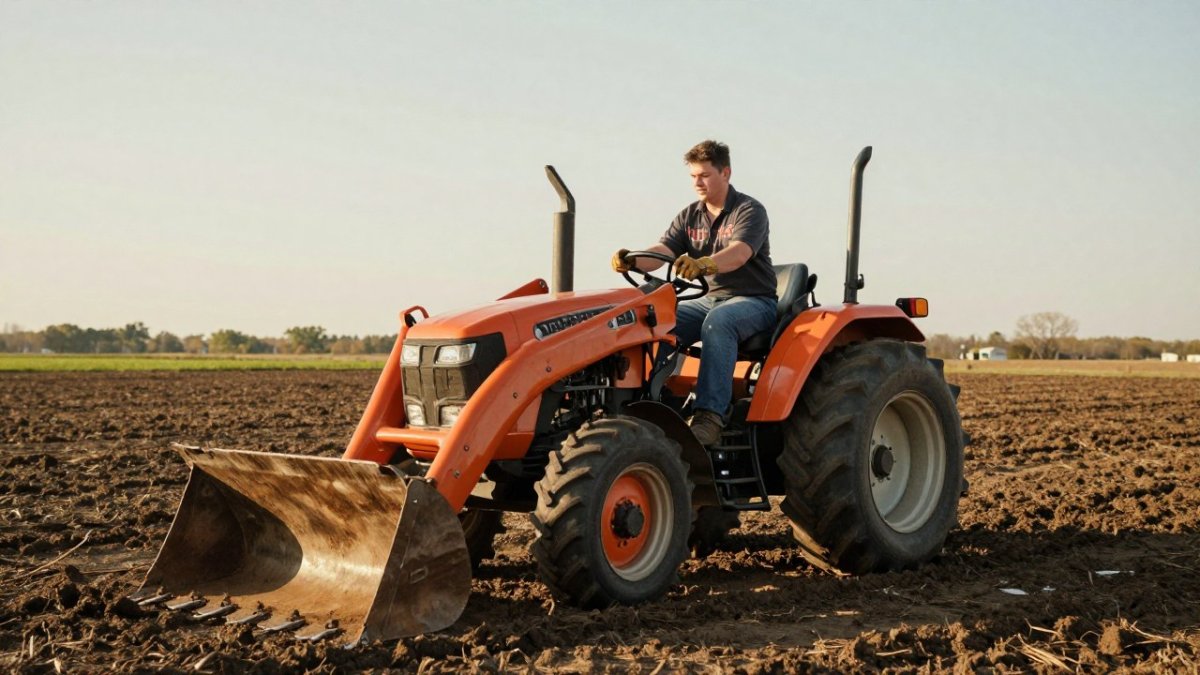
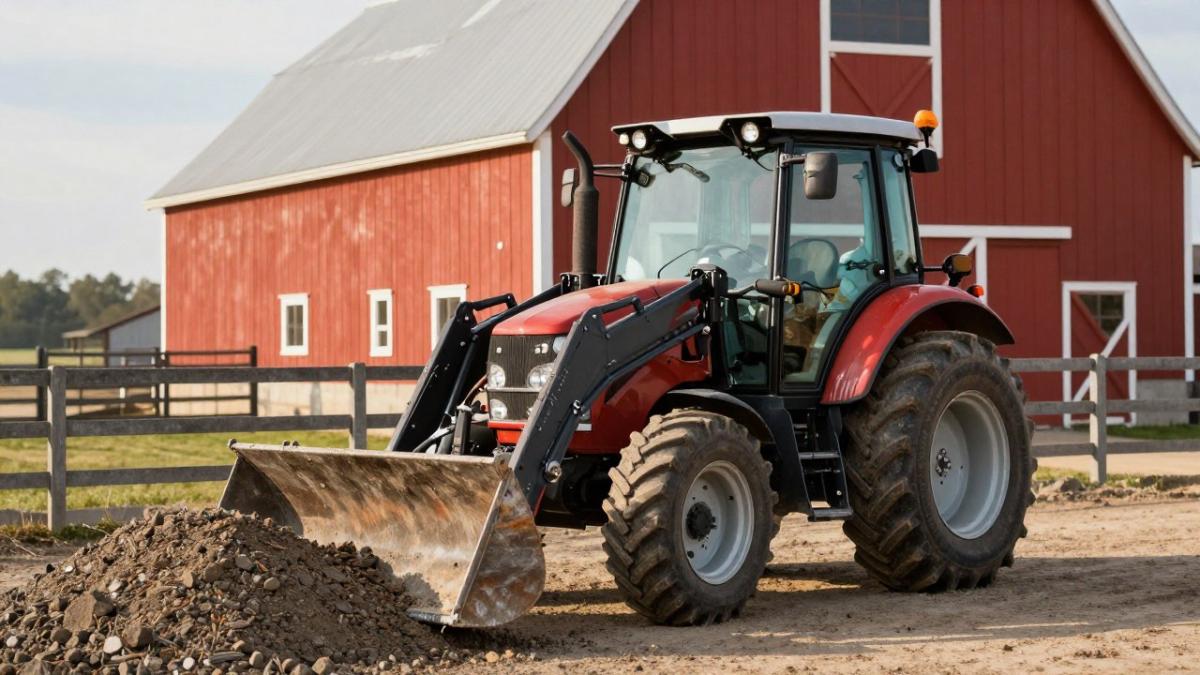
A compact tractor with a front-end loader can handle material handling, grading, and land clearing that would otherwise mean a wheelbarrow and a shovel.
Buying a Used Compact Tractor for Small Farm Budgets
A used compact tractor stretches a budget further, provided you inspect it the way a mechanic would. Check the hour meter against the service records, look for hydraulic leaks at the cylinder seals and under the transmission, and run every implement through its full range before money changes hands.
- Verify engine hours and service history
- Inspect hydraulic hoses, cylinders, and fittings for weeping
- Test the three-point hitch and PTO under load
When you are ready to browse, our used machines inventory shows what is on the lot.
What a Compact Tractor for Small Farm Price Really Includes
The sticker price rarely tells the whole story. A compact tractor for small farm price depends on the model, the loader, the transmission, and whether implements are bundled. Pricing depends on the model, loader configuration, and whether the machine is new or used, so request a current quote from our team for an out-the-door figure.
Finding a Compact Tractor for Small Farm Near Me in Western New York
Western New York terrain and weather shape which tractor makes sense, and the differences are practical rather than cosmetic. Western New York terrain and weather can vary considerably, from wet spring soils to heavy snowfall and rolling pastures. Each of those conditions pushes a buyer toward specific machine features:
- Wet spring soils: traction and tire choice matter more than raw horsepower. R-4 industrial tires are a common compromise for loader work and lawn edges, while R-1 agricultural tires bite better in mud and loose soil but mark turf. Loaded rear tires and a wider stance help on soft ground, and a lighter sub-compact can actually be an advantage on lawns that would rut under a heavier machine.
- Lake-effect snow: a front-mount snow blower or a loader-mounted plow turns a compact tractor into a winter tool, but both depend on hydraulic flow and, for the blower, a mid-PTO. Buyers who plan to clear a long driveway should confirm those features before purchase rather than adding them later.
- Hilly pastures: a wider stance, loaded rear tires, and rear ballast keep the machine planted on slopes. A compact with a heavier frame is often the safer choice on rolling ground than a lighter sub-compact with the same horsepower.
Dealer, Service, and Parts Access Near Le Roy
When searching for a compact tractor for small farm near me, prioritize a dealer who stocks parts and services what they sell. Ask questions before you buy, such as who performs warranty work, how quickly parts can be sourced, and whether delivery and setup are handled. Our guide on how to find a compact tractor for sale near me walks through the local shopping steps.
Ownership Logistics on a Small Property
A compact tractor is only useful if it fits your property and your storage. Measure gate widths, barn doors, and turning areas before you choose a model. Ground pressure matters too: a heavier machine ruts wet lawns and soft pastures faster than a lighter one, and loaded tires add weight that helps traction but worsens compaction. Because towing capacity and deck dimensions can rule out an otherwise suitable tractor, Urgency Trailer Rentals is a useful next stop when matching a trailer to the machine and its implements.
Test-Drive a Compact Tractor at 7S PowerSports in Le Roy
The best way to judge a tractor is to sit in the seat and run it. At our Le Roy dealership, we stock Bad Boy tractors and walk buyers through loader operation, hitch setup, and implement matching before they commit. Ready to schedule a visit? Contact our team to set up a test drive and get straight answers on configuration and pricing.
Choosing the right machine for acreage, terrain, and season takes more than a spec sheet. 7S PowerSports, LLC carries Bad Boy and Mahindra tractors with loaders and implements, backs every sale with a full-service parts and service department, and helps Western New York property owners match equipment to the work ahead.
Frequently Asked Questions
What size compact tractor do I need for a small farm?
For most 5 to 40 acre properties, a 25 to 45 HP compact tractor handles mowing, loader work, and grading without being oversized for tight spaces. Match horsepower to your heaviest regular task: loader and brush-cutting work on hilly terrain pushes you toward the higher end, while mowing and light hauling stay comfortable in the mid range. Measure your narrowest gate and stall before you commit, since physical size limits maneuverability more than horsepower does.
Is a front-end loader worth it on a compact tractor?
A loader is the attachment most small-farm owners use weekly, so it usually earns its cost. It covers material handling, gravel spreading, manure cleanup, and snow removal with a bucket or blade. The trade-off is added length and weight up front, which affects turning in tight barns. If your property has livestock, a long driveway, or ongoing landscaping projects, buy the loader with the tractor rather than adding it later.
Should I buy a new or used compact tractor for a small farm?
Used tractors stretch a budget further but require inspection. Check engine hours, hydraulic leaks, loader cylinder condition, tire wear, and whether the three-point hitch lifts smoothly through its range. Ask for service records and confirm parts availability for that model. New tractors bring warranty coverage and dealer support, which matters if you rely on the machine seasonally. In western New York, a local dealer who services what they sell is worth weighing alongside the sticker difference.
What implements should I get with a compact tractor?
Start with the tasks you do most. A loader bucket, rotary cutter for brush and tall grass, and box blade for grading driveways cover most small-farm needs. Add a tiller for garden plots, a snow blower or blade for winter, and a trailer or pallet forks for material handling as projects grow. Confirm the three-point hitch category and hydraulic flow before buying attachments, since compatibility varies by model and configuration.
How much does a compact tractor for small farm use cost?
Pricing depends on horsepower, loader configuration, transmission, and whether the machine is new or used, so ask your dealer for a current quote rather than relying on advertised figures. Budget beyond the tractor itself: implements, trailer or hauling, insurance, fuel, and scheduled maintenance all add to ownership cost. A used unit may lower the purchase price but can raise repair spending, so factor service history into the comparison.