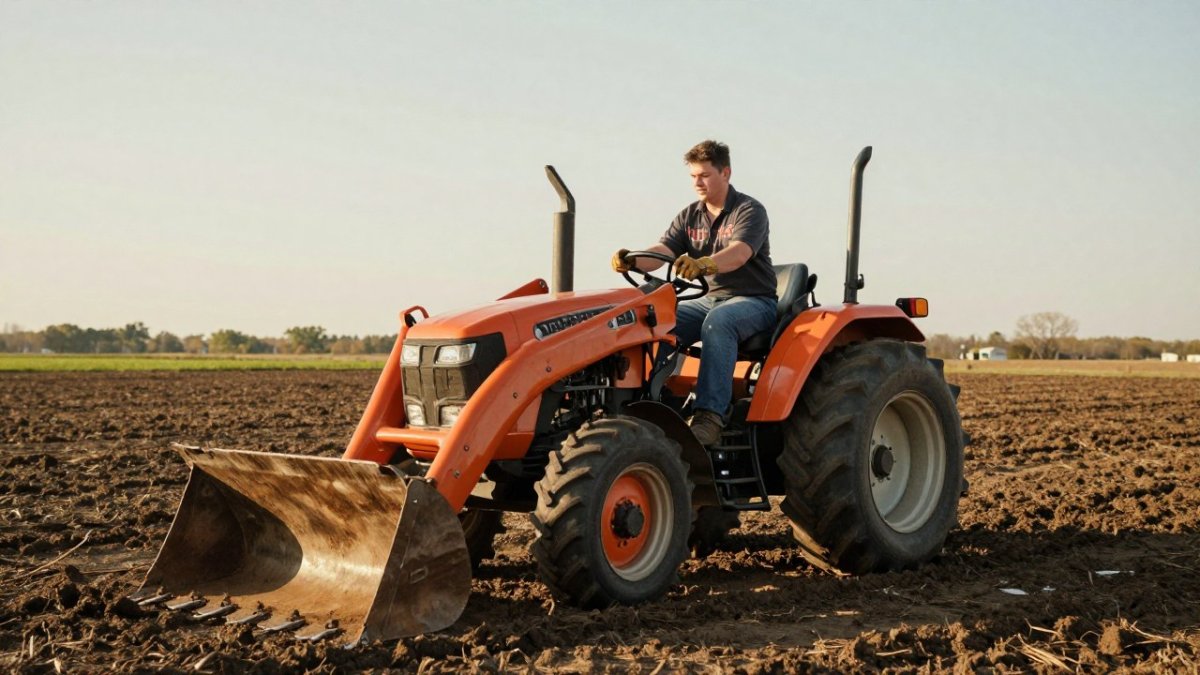
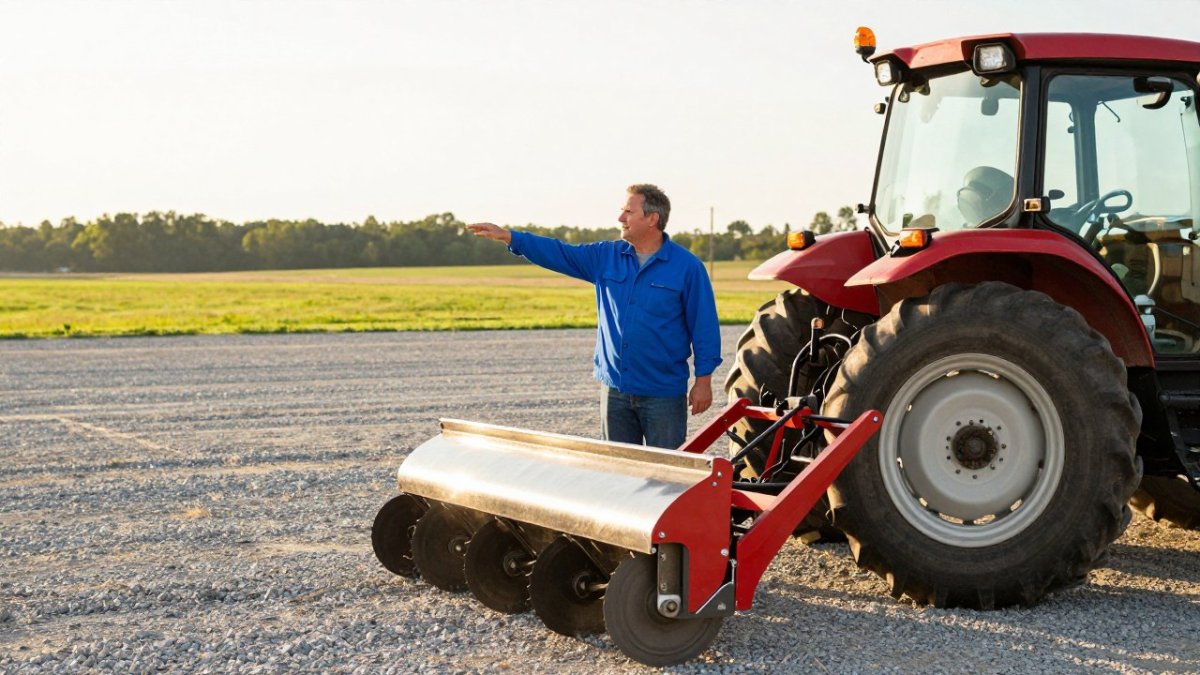
 Comparison
Rotary Cutter vs Finish Mower for Tractor: Which to Buy
Last Updated: November 21, 2026
Quick Summary
A rotary cutter is built to knock down brush, weeds, and saplings on rough terrain, while a finish mower delivers a clean, lawn-like cut on maintained grass. Choose a rotary cutter for reclaiming overgrown fields and a finish mower for lawns and groomed pasture.
- Rotary cutter blades are thick and swinging, shredding vegetation instead of slicing it cleanly.
- Finish mowers typically cut about 1 to 4 inches, with lawn settings between 2 and 3 inches.
- If you would walk across it barefoot, mow it with a finish mower.
- Match the implement to your tractor's PTO horsepower, hitch category, and mowing width before buying.
- On a used rotary cutter, check blade condition, gearbox seals, deck rust, and the slip clutch.
Table of Contents
- Rotary Cutter vs Finish Mower: The Quick Comparison
- How a Rotary Cutter and a Finish Mower Cut Differently
- Rotary Cutter vs Finish Mower for Tractor Pros and Cons
- When a Finishing Mower for Tractor Is the Right Call
- Flail Mower vs Finish Mower: Where a Third Option Fits
- Matching a Cutter or Mower to Your Tractor and Property
- Used Rotary Cutter vs Finish Mower for Tractor: What to Check
- Choosing Your Implement at 7S PowerSports in Le Roy
- Frequently Asked Questions
Rotary Cutter vs Finish Mower: The Quick Comparison
If you own a compact tractor, the rotary cutter vs finish mower for tractor decision usually comes down to one question: are you maintaining a lawn, or are you reclaiming ground? The answer to this question rarely changes, whether you are in Le Roy or anywhere across Western New York. A rotary cutter is a heavy-duty implement built to knock down brush, weeds, and saplings on rough terrain. A finish mower is built for a clean, lawn-like cut on maintained grass.
Here is the short version:
| Factor | Rotary Cutter | Finish Mower |
|---|---|---|
| Best for | Brush, weeds, rough fields | Lawns, pastures, groomed turf |
| Cut quality | Rough, shredding action | Clean, manicured finish |
| Typical use | Field mowing, land clearing | Lawn maintenance, pasture upkeep |
| Handles saplings | Yes | No |
| Terrain | Uneven ground, debris | Smooth, level ground |
| Blade style | Heavy swinging blades | Fine, high-speed blades |
How a Rotary Cutter and a Finish Mower Cut Differently
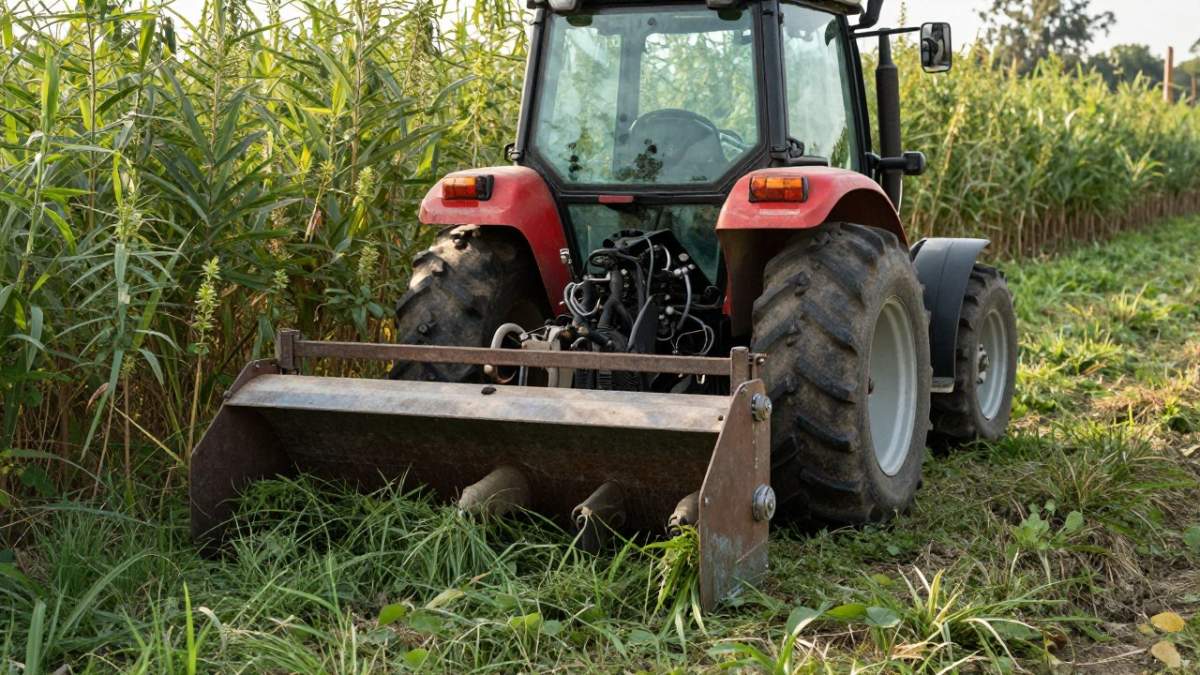
A rotary cutter uses a single heavy horizontal blade assembly that spins fast and shreds vegetation rather than slicing it cleanly. A finish mower uses multiple smaller blades under a mower deck, spinning at higher blade speed to shear grass for a manicured finish.
Blade Design, Blade Speed, and Cut Quality
Rotary cutter blades are thick, swinging, and designed to absorb impacts from rocks and saplings. That blunt-force approach leaves a rough cut, which is exactly what you want on a brush hog job. Finish mower blades are lighter and sharper, cutting grass cleanly for a smooth appearance. The trade-off is simple: durability versus finish quality.
Cutting Height and Finish Expectations
Finish mowers let you dial in cutting height precisely for a manicured lawn. Rotary cutters typically run higher, leaving a rougher cut that hides uneven ground and debris. If you expect a golf-course look, a rotary cutter will disappoint you every time.
Rotary Cutter vs Finish Mower for Tractor Pros and Cons
Here is a breakdown organized around the jobs each implement actually does.
Rotary cutter pros: handles brush, weeds, and saplings; survives rough terrain and debris; forgiving of uneven ground; great for reclaiming overgrown fields.
Rotary cutter cons: rough cut quality; heavier and hungrier on tractor power; not for lawns.
Finish mower pros: clean, manicured finish; precise cutting height; lighter load on the tractor; ideal for pasture maintenance and lawn maintenance.
Finish mower cons: struggles with thick brush and saplings; vulnerable to rocks and debris; needs smoother ground.
Neither is "better." They solve different problems. The table below maps common vegetation and property scenarios to the implement that fits best.
| Scenario | Best implement | Why |
|---|---|---|
| Maintained lawn around a home | Finish mower | Clean cut and precise height control |
| Regularly clipped pasture | Finish mower | Handles grass, not brush |
| Overgrown field with tall weeds | Rotary cutter | Shreds heavy growth without bogging |
| Field edges with saplings | Rotary cutter | Swinging blades absorb impacts |
| First-time clearing of brush | Rotary cutter | Built for rough, uneven ground |
| Mixed rough patches and turf | Both, or a flail mower | Each implement suits part of the property |
Cut-Height and Finish Expectations in Measurable Terms
Finish mowers typically cut in the range of about 1 to 4 inches, with most lawn settings falling between 2 and 3 inches. Rotary cutters generally run higher, often from about 2 inches at the lowest setting up to 6 inches or more, and the cut is rougher because the blades shred rather than shear. Vegetation density, blade condition, ground speed, and deck setup all affect the result. Dull blades tear grass and leave a brown, frayed tip; sharp blades cut cleanly. Running too fast over dense growth leaves uncut strips and a ragged finish.
Seasonal Mowing and Vegetation Scenarios
In western New York, the mowing calendar splits along the same lines as the implement choice. Late spring and early summer bring the heaviest pasture and field growth, when a rotary cutter earns its keep on tall, stemmy vegetation and saplings. Maintained lawns and groomed turf need regular finish mowing through the summer, with the deck set to the height the grass species prefers. Early fall brings a second growth flush on pasture, and a final pass before winter helps keep fields manageable the following spring. First-time clearing of overgrown ground is rotary cutter work regardless of season; once the ground is tamed, a finish mower can take over on the areas you want to keep groomed.
When a Finishing Mower for Tractor Is the Right Call
Choose a finishing mower for tractor work when your ground is already tamed and you want it to stay that way. If you are mowing a lawn, a regularly maintained pasture, or open turf around a home, a finish mower delivers the clean appearance a rotary cutter cannot match.
The rule we use: if you would walk across it barefoot, mow it with a finish mower. If you would need boots and a plan, bring out the rotary cutter.
Flail Mower vs Finish Mower: Where a Third Option Fits
A flail mower sits between the two. It uses many small blades on a horizontal rotor, giving a finer cut than a rotary cutter while handling rougher vegetation than a finish mower. If your property has a mix of rough patches and groomed areas, a flail mower can cover both without switching implements.
For most homeowners, though, the rotary cutter and finish mower pairing covers the job with less complexity and easier blade maintenance.
Matching a Cutter or Mower to Your Tractor and Property
Match your implement to your tractor's PTO horsepower, hitch, and mowing width before you buy. Undersized tractors bog down in tall grass; oversized implements waste fuel and productivity. The practical decision process below works for Le Roy and western New York properties, where wet soils, seasonal growth windows, and mixed brush-and-lawn acreage are the norm.
PTO Horsepower, Hitch, and Mowing Width
Check that your tractor's PTO horsepower meets the implement's requirement, that the three-point hitch category matches, and that the mowing width suits your gates and trails. A wider deck means fewer passes and better productivity, but only if the tractor can pull it through dense vegetation.
Confirm the implement's published PTO requirement against your tractor's PTO rating, not its gross engine rating, because the two numbers differ.
Hitch category matters as much as horsepower. Category 1 three-point hitches are standard on compact tractors, and most cutters and finish mowers in this class are built for Category 1.
Mowing width should follow your property's layout. If you are still weighing tractor sizes, our guide on how to choose the right tractor for small farms walks through the decision, and you can compare specs on a 2026 Bad Boy 3026h Tractor to see how PTO output lines up with common cutter sizes.
Western New York Property Conditions
Western New York properties often face wet spring soils, and mowing saturated ground with either implement risks rutting, compaction, and stuck tractors.
Pasture growth peaks in late spring and early summer, with a second flush in early fall. Rotary cutters handle the first flush of tall, stemmy growth and the saplings that creep into field edges; finish mowers keep maintained turf and lawn areas tidy through the summer.
Rough Terrain, Uneven Ground, and Safety
Rough terrain demands respect. Rotary cutters can throw debris and rocks, so keep discharge directed away from people, vehicles, and windows. On uneven ground, slow your ground speed and watch for scalping with a finish mower. Always disengage the PTO before dismounting.
Before each mowing session, walk the area and remove rocks, wire, branches, and debris that either implement could throw. Set the discharge chute or guards in place and keep bystanders, pets, and livestock clear of the mowing path. When mowing near roads, buildings, or property lines, direct discharge away from traffic and structures. Keep the discharge side clear, since a rotary cutter can throw rocks and debris.
Used Rotary Cutter vs Finish Mower for Tractor: What to Check
Buying used can save money, but inspect carefully. On a used rotary cutter, check the blade condition, gearbox seals, deck rust, and that the slip clutch or shear bolt is intact. On a used finish mower, spin the blades by hand, inspect the deck for cracks, and confirm the spindle bearings turn freely. A worn gearbox or bent spindle turns a bargain into a repair bill.
Choosing Your Implement at 7S PowerSports in Le Roy
Stop guessing and match the implement to your ground. Browse the Bad Boy lineup we carry, look at a 2026 Bad Boy 5045 Tractor for heavier cutter work, or contact us to talk through your acreage.
The right implement turns an overgrown property into ground you actually enjoy. If you are tired of guessing which cutter fits your tractor and your land, let our team take the doubt out of it. We offer expert help matching equipment to your property, a full-service parts and service department to keep it running, and honest advice from people who use this equipment themselves.
Frequently Asked Questions
What is the difference between a rotary cutter and a finish mower?
A rotary cutter is built for rough mowing: heavier deck, swinging blades, and a cut that clears brush, weeds, and saplings without a lawn-quality finish. A finish mower is built for maintained grass, with a lighter deck and blades that leave a cleaner, more even cut. In short, the rotary cutter handles vegetation density and rough terrain, while the finish mower handles appearance on turf and pasture you mow regularly.
Is a finish mower better than a bush hog?
Only on ground that is already maintained. A bush hog, which is another name for a rotary cutter, wins on rough fields, tall weeds, and saplings because its deck and blades are made for that work. A finish mower wins on lawn, around buildings, and on pasture you mow on a schedule. Many property owners in western New York end up owning both rather than choosing one.
Can a tractor finish mower cut tall grass?
It can, but not for long. A finishing mower for tractor use is designed for regular cuts on grass that has not gotten away from you. If grass is tall or wet, you will need to slow ground speed, take a partial cut, and possibly mow twice. Repeatedly forcing a finish mower through heavy growth wears the blades and belt faster than a rotary cutter would.
What size tractor do you need for a rotary cutter or finish mower?
Match the implement to PTO horsepower and hitch category, not engine size alone. Rotary cutters generally need more PTO horsepower per foot of mowing width because they chew through heavier material; finish mowers need less for the same width. Always check the implement's published PTO horsepower requirement and weight against your tractor's three-point hitch lift capacity before buying.
Which mower is better for uneven fields and rough ground?
A rotary cutter handles uneven ground and rough terrain better. Its heavier deck, swinging blades, and higher cutting height tolerate rocks, stumps, and debris that would damage a finish mower. A finish mower can scalp on uneven ground and is more exposed to rock throwing and deck damage. If your field has dips, ruts, or hidden obstacles, start with a rotary cutter.