 Comparison
Gas vs Battery Zero Turn Mowers for Homeowners
Last Updated: November 10, 2026
Quick Summary
The right zero turn mower for homeowners usually comes down to gas or battery. Gas models dominate for larger lots with longer run times and faster refueling, while battery models win on quiet operation, lower maintenance, and zero exhaust fumes. For most homeowners mowing under an acre in Western New York, a battery unit is worth a close look, but above that, gas still earns its keep.
- Battery zero turn mowers offer limited run time per charge, often covering 1-3 acres.
- A 42-inch deck suits most half-acre to one-acre lots, while 48- to 54-inch decks cut mowing time on two acres or more.
- A 42-inch deck typically needs at least 44 to 46 inches of gate clearance, and a 54-inch deck roughly 56 inches or more.
- On grades steeper than about 15 degrees, a lawn tractor or walk-behind mower is often safer than a zero-turn.
- A gas mower's lower purchase price is partly offset by several hundred dollars a year in fuel and service.
Table of Contents
- Gas vs Battery Zero Turn Mowers: Quick Comparison
- The Best Zero Turn Mower for Homeowners by Yard Size
- Zero Turn Mower for Homeowners Prices and What Drives Them
- Frequently Asked Questions
Gas vs Battery Zero Turn Mowers: Quick Comparison
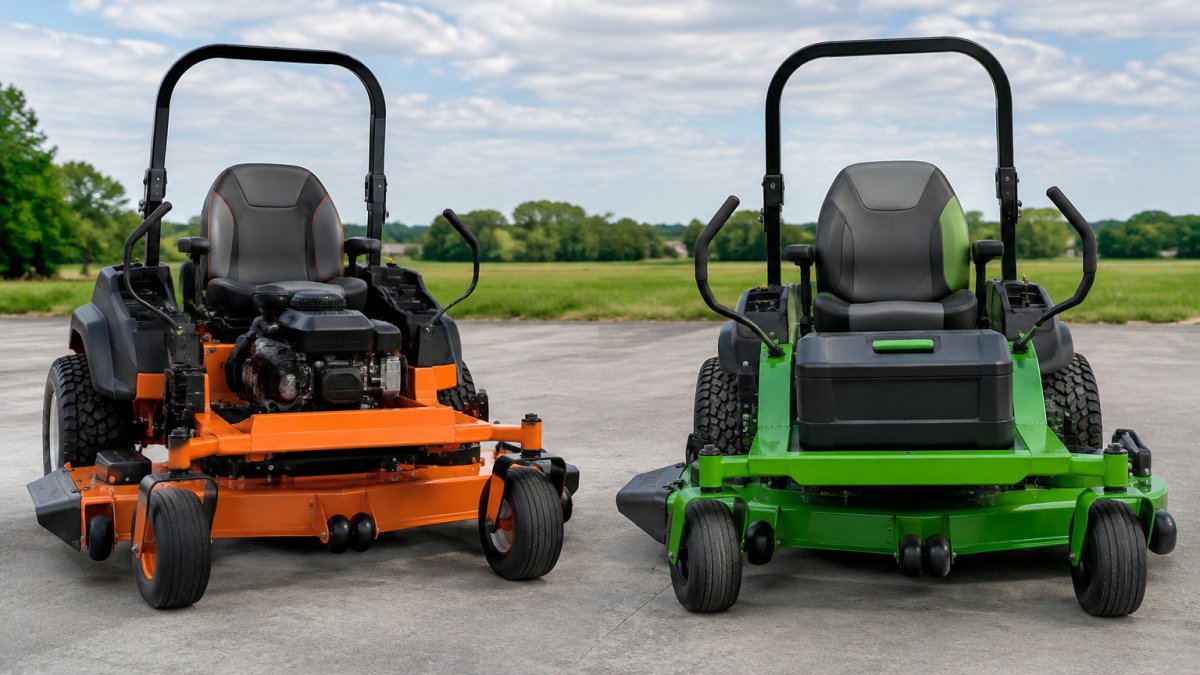
The right zero turn mower for homeowners usually comes down to gas or battery. Gas models dominate for larger lots with longer run times and faster refueling; battery models win on quiet operation, lower maintenance, and zero exhaust fumes.
| Factor | Gas Zero Turn | Battery Zero Turn |
|---|---|---|
| Run time | All day with refueling | Limited per charge, often 1-3 acres |
| Maintenance | Oil, filters, belts, spark plugs | Minimal, no oil changes |
| Noise | Louder | Quiet enough for early mornings |
| Upfront cost | Generally lower | Generally higher |
| Best for | Larger yards, tough grass | Smaller lots, noise-sensitive areas |
For most homeowners mowing under an acre in Western New York, a battery unit is worth a close look. Above that, gas still earns its keep. Browse the Bad Boy lineup to see both configurations side by side.
U.S. Department of Energy guidance on electric lawn equipment
The Best Zero Turn Mower for Homeowners by Yard Size
Match the mower to the yard. Deck width drives mowing time and gate clearance: a 42-inch deck suits most half-acre to one-acre lots, while 48- to 54-inch decks cut mowing time on two acres or more.
As a rule of thumb, a 42-inch deck cuts roughly 1.5 to 2 acres per hour, a 48-inch about 2 to 2.5, and a 54-inch about 2.5 to 3, depending on obstacles and operator speed.
Deck width also has to clear the property. Measure the narrowest gate and subtract a few inches: a 42-inch deck typically needs at least 44 to 46 inches, and a 54-inch deck roughly 56 inches or more. Check shed door width and turning radius too.
Homeowners with sloped or uneven ground should prioritize traction and low center of gravity over deck size, mowing up and down rather than across the face. If your property has hills, our guide to the best zero turn mowers for hilly property covers slope-capable picks. On grades steeper than about 15 degrees, a lawn tractor or walk-behind mower is often safer, and a zero-turn should not be used on wet slopes.
Zero Turn Mower for Homeowners Prices and What Drives Them
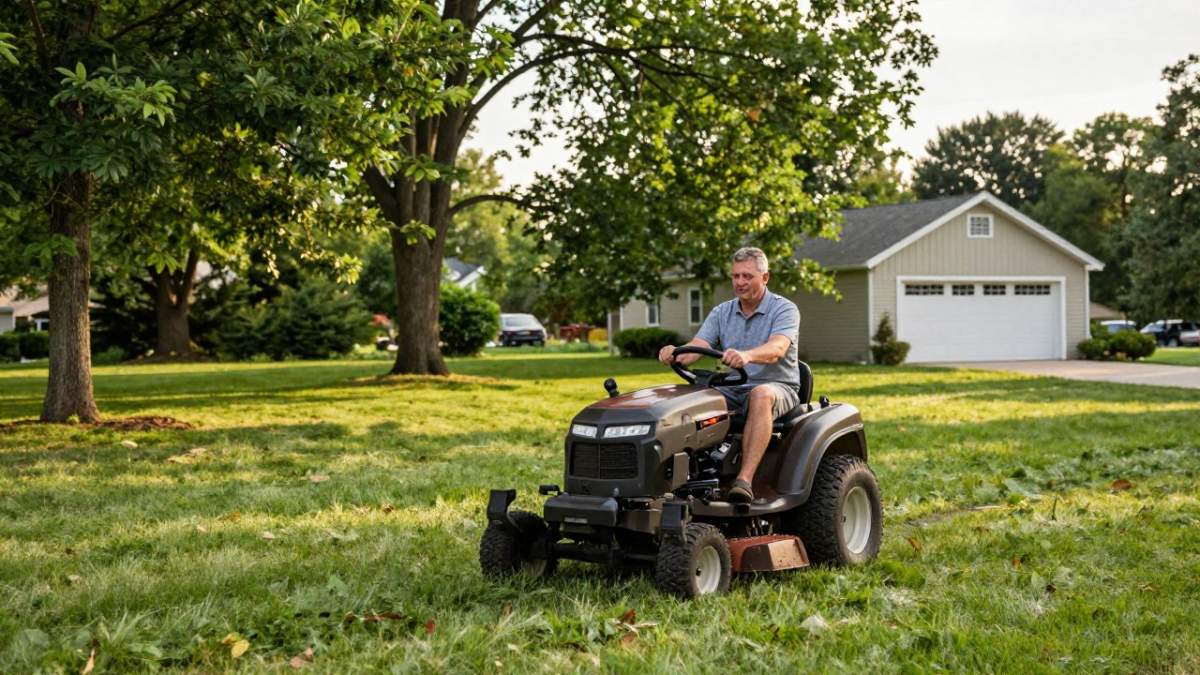
Pricing for a zero turn mower for homeowners depends on deck size, engine type, frame construction, and transmission quality.
Pricing depends on the model, deck width, engine or battery type, inventory, and promotions. For current prices, check our website or request a quote from 7S PowerSports, LLC. Check our current inventory, read our tips on finding a zero turn dealer, or contact us for a quote.
Deck width is the biggest single price driver: a fabricated deck costs more than a stamped one but holds up better to rough terrain and years of use. A serviceable transmission is usually worth the upcharge on a property with slopes or more than an acre of grass.
Total cost of ownership goes beyond the sticker: budget for fuel or electricity, annual maintenance, seasonal storage, and eventual repairs. A gas mower's lower purchase price is partly offset by several hundred dollars a year in fuel and service, while a battery mower's higher upfront cost is partly offset by fewer service visits and no fuel; battery pack replacement is a real cost to plan for.
Ask how warranty claims are processed, whether loaner equipment is available, and how long parts take to arrive. For buyers weighing new against used, a used zero turn mower for homeowners can stretch a budget.
FTC guidance on buying a used car or equipment
Finding a mower that fits your yard, your slopes, and your budget takes local knowledge. At 7S PowerSports, LLC, we carry Bad Boy zero-turn mowers, offer full-service repairs and OEM parts, and help homeowners across Le Roy and Western New York pick the right machine. Get started with 7S PowerSports, LLC and mow with confidence.
Frequently Asked Questions
Is a zero turn mower worth it for a homeowner?
For lawns around an acre or more with trees, beds, and fences to mow around, a zero turn mower usually saves real time. The tight turning radius cuts trimming passes, and higher mowing speed shortens each session. On small, flat lots under half an acre, a lawn tractor or walk-behind may cost less and still get the job done. The deciding factors are acreage, obstacle count, and how much time you want back each week.
What size zero turn mower is best for a residential lawn?
Match deck width to your gates and obstacles, not just acreage. A 34-inch fabricated deck fits narrow gates and tight landscaping on lots under an acre. Decks in the 42 to 54 inch range suit one to three acres with room to maneuver. Wider decks mow faster in open areas but can scalp on uneven ground and may not clear a standard gate. Measure your narrowest gate and storage opening before choosing.
Is a residential or commercial zero turn mower better for home use?
Residential models cover most homeowner needs at a lower purchase price, with lighter frames and smaller engines built for weekly mowing. Commercial units add heavier hydros, thicker decks, and higher-hour engines for daily use, which costs more up front. If you mow one property a few hours a week, a residential-grade mower is the practical choice. Step up to commercial only if you take on neighboring lots or run the machine hard.